Back to previous page

Boss who keeps a low profile

by Ven Sreenivasan, Apr 24 2009 The Boustead CEO believes that the ability to adapt to changing market conditions is the way to success, writes Ven Sreenivasan

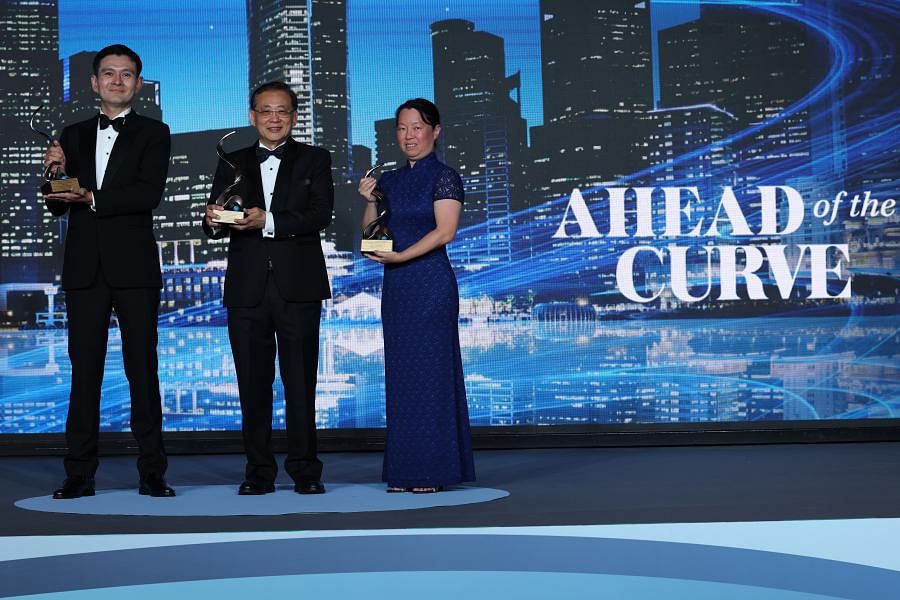
When Wong Fong Fui was told he was co-winner as CEO of the Year in the $300 million to $1 billion market cap category at the 2009 Corporate Awards, his first reaction was one of amazement. 'Why me?' he asked. 'I never considered myself an outstanding CEO. In any case, I could not have achieved anything without my people, shareholders. They are the ones who should get recognition.'

It was typical FF Wong, a man who, despite his achievements and prominence - he is rated one of Singapore's richest businessmen by Forbes - does not take himself too seriously. 'FF Wong is not important,' he told BT. 'Why don't you write about Boustead and how it has become a 180-year-old world beater?'

Indeed, last year the company, which was set up by Englishman Edward Boustead as a trading outfit in 1828 on the banks of Singapore River, celebrated its 180th birthday. Technically, Boustead is Singapore's second-oldest company, after Guthrie GTS. But Guthrie vanished for several years in the mid-1980s when Malaysian tycoon Tan Koon Swan bought it and then absorbed it into the stable of Malaysian-listed Gamuda. Mr Tan's troubles during the Pan Electric debacle of the mid-1980s forced him to divest Guthrie later, and the company was reincarnated as Guthrie GTS.

Technicalities aside, Boustead remains the only Singapore-based company that can boast an unbroken lineage going back almost two centuries. But back to Mr Wong. The 65-year-old businessman bought the then Bousteadco Singapore in 1996 from Jack Chia-MPH. The deal raised eyebrows among business insiders who wondered whether the man known at the time as the turnaround artist was losing his touch.

The reason: Mr Wong paid $85 million for a company whose net worth at the time was just $27 million. And Bousteadco was earning $1 million on turnover of $60 million. It was not a characteristic investment by a businessman with a 40-year track record and one who helped set up a privately owned national airline in Myanmar - subsequently taken over by the state - and transformed mainboard-listed bread maker QAF into a pan-Asian brand. 'I recall some scathing newspaper write-ups about my decision to pay so much for so little,' Mr Wong laughed.

But he saw things differently.

'This was a company with a great history and pedigree,' he said. 'It was a raw gem that needed polishing.' He quickly set about transforming Bousteadco, building up its capabilities in design, engineering, resource management technology and specialist construction.

Boustead now has an order book of more than $500 million, net cash of $200 million and is looking to unveil 'record' earnings growth for a seventh straight year when it announces its results to end-March 2009. Last year, net profit rose 46 per cent to a record $51.5 million - surpassing analysts' expectations - as revenue rose 28 per cent to $438.3 million. Earnings for the nine months to end-December were $25 million. But for the final quarter, Boustead will recognise at least a $25 million gain from the $200 million sale of its 40 per cent-owned Starhub Green building.

Boustead's order book includes a $174 million water infrastructure project in Libya - its second project there. The company also has major contracts in Singapore, such as designing and building a $37 million aircraft engine maintenance and overhaul project, a $67 million semiconductor project and the $60 million Singapore Free Port project. One of its single biggest projects is the $300 million Al Marj township near the Libyan capital of Tripoli.

So what is the secret of Mr Wong's success?

The ability to adapt to changing market conditions. 'Never run your company to win approval and popularity from market watchers,' he said. 'At Boustead we plod along, unmoved by the opinions of analysts or fund managers.' He points out that Boustead has survived many crises and twists and turns of business cycles. 'In 1973 when Boustead Bhd broke away in Malaysia with all the valuable plantation assets, Bousteadco Singapore was left with virtually nothing but a number of small service businesses,' he said. 'When I bought it, it was a much diminished player, hardly noticed by the market. But we adapted to the new market conditions and capitalised on new opportunities.'

Currently, the company's customised real estate solutions unit accounts for a third of its revenue, while another third comes from energy engineering. About 20 per cent comes from geo-spatial engineering, while waste water engineering generates another 10 per cent.

Keeping to his mantra of constant change and adaptability, Mr Wong said Boustead will change some parts of its business model - yet again. 'The global marketplace has changed,' he said. 'We are in a crisis, yet a fast-changing environment. This is an environment where cash is king. Companies like ours, with cash and no borrowings, have certain advantages in a downturn that we did not enjoy during bullish times. Today, fund managers are in trouble. Reits are out of money. On the other hand, we are sitting pretty, with banks coming to us to ask if we would like to borrow money.'

In the current climate, with companies cash-strapped, Boustead may shift from its build-and-transfer model to build-and-leaseback, Mr Wong said. 'In the past we were merely builders. But now, in some markets, we may take positions if the potential yield is attractive.'

Going forward, Boustead's geo-spatial and oil and gas services units - especially in markets such as the Arabian Gulf and South America - are expected to see strong growth. Mr Wong is also on the lookout for acquisitions - including smaller listed companies - to help power Boustead's growth going forward. 'This is a market where we can cherry pick,' he said.

Despite the global recession, which he believes could last well into 2010, he is confident that Boustead's growth will remain intact if it adapts to changing economic and business conditions. 'The new economic realities have thrown up challenges and opportunities,' he said. 'We see a shift in economic wealth from the resource hungry West to the resource rich and populous East. We already have a strong presence in the latter markets. We also have the cash, technology and people to capitalise on the emerging opportunities.'

Back to top