Back to previous page

Banking on Human Capital

by Chew Xiang, Apr 24 2009 An organisation's culture and leadership are the real growth engines, Rotary Engg chief tells Chew Xiang.

Almost exactly a year ago, Chia Kim Piow and Rotary Engineering, the company he founded over 30 years ago, were awarded the prestigious Enterprise Award at the Singapore Business Awards. He told this writer then: 'Don't write it so that we're too good. We're just a very modest company.'

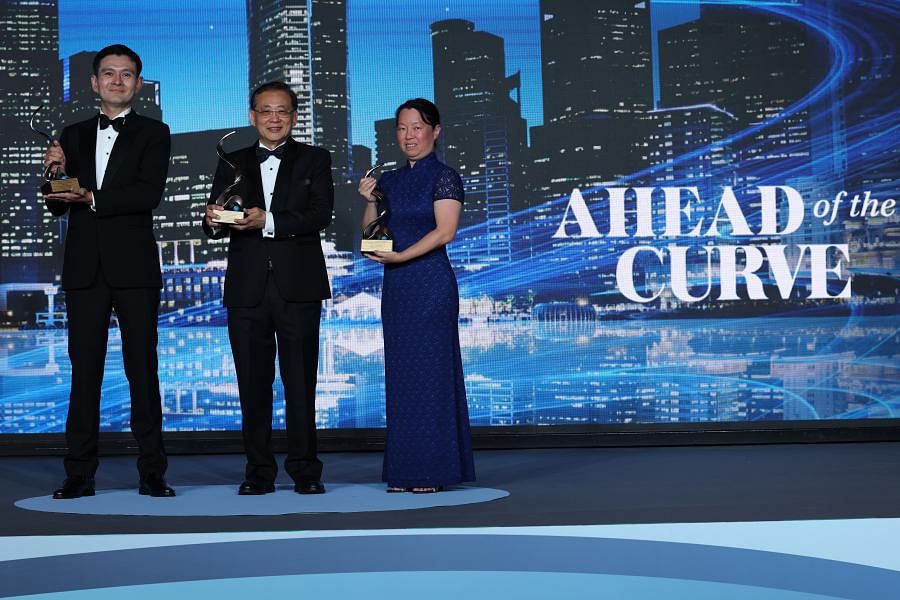
It's a claim that's holding less and less water for Mr Chia and his company, which does engineering and construction work for the oil and gas industry, specialising in energy storage and distribution terminals. This year, Mr Chia has another medal to make a growing tally - the Best CEO award at the Singapore Corporate Awards in the mid-cap $300 million to $1 billion category, shared with Boustead Engineering's Wong Fong Fui.

That's borne out by some strong results for the last year - net earnings of $50.9 million on revenue of $520.1 million. Orders completed in 2008 included a joint-venture hydrocarbon industrial waste project with Italy's Sofinter group, facilities for Power Seraya and a chemical process plant for JGC Singapore. As at Dec 31, the group had an order book of $446 million.

Mr Chia credits 'our focus on our clients and their long-term support for us; that they keep coming back with recurrent deals has helped us tremendously'. Among them, he lists Oiltanking Singapore, with whom Rotary has forged a relationship for almost two decades, which awarded the company three contracts in excess of $102 million in 2008. Others are Shell Eastern Petroleum, Thai Tank Terminal, SKEC (Thai) Ltd, CTCI (Thailand) Co Ltd and PTT Aromatics and Refining. And that's even as the omens seem poor for the industry. As Mr Chia noted in his message to shareholders in the annual report: 'With oil prices down, demand for infrastructure is likely to be affected in the various markets that Rotary operates in around the world.'

Five-year plan
Yet the company is pushing ahead with an ambitious five-year plan - the Rotary Globalisation Plan (RGP). 'While the immediate outlook may not be as rosy, we are confident that the upturn will come. The key for Rotary is to be prepared for it, and when it does come, to be prepared to ride the growth wave again,' he wrote. The RGP, launched last year, 'charts the company's growth directions globally by identifying priority overseas markets and target sectors, restructuring the organisation and improving internal business processes', Mr Chia explains.

Eight key business units identified are already up and running, and his 'Global Work Force' concept - sort of a rapid-action commando team of engineers and craftsmen which can fulfil business needs around the world at short notice - is well underway. A training centre has been built in Dalian, China, with a second opened in Fushun, also in China. A third is on course for the Middle East 'when the time is right', Mr Chia says.

Almost 600 staff have graduated from its training centres. 'As a service company, our people are our most important resource and are central to our success,' he says. The Global Work Force is just one aspect of the importance Mr Chia places on human resources. 'Human capital is our prime asset,' he says. 'We manage them, train them and expose them so that they will gain from their experience and apply their expertise in their work to service our clients.'

The Rotary story began in 1972, when the firm started out as an 'electrical and instrumental sub-sub contractor', he told BT last year. 'When I was young I didn't know what was going on so I just took the opportunity when it came along. I joined an electrical construction company in 1969, then later I set up my own.' The company chugged along until Singapore ran into a juddering recession in 1985. It was a case of 'either we advance, or we close down', he said. He managed to hire 18 design engineers from a Japanese company in even worse shape, and moved up the value chain to focus on design engineering and procurement.

Rotary got its first break overseas in Thailand with a $40 million project from a multinational company. Rotary went on to projects in other countries and in 2005 landed its biggest deal back home - the $535 million project to build Asia's largest oil terminal for Universal Terminal on Jurong Island. Orders and plaudits have flowed in since then.

Despite the present downturn, 'Rotary has been making strong, steady internal investments such as our people, RGP, systems, software, automation and equipment. We are also open to merger and acquisition opportunities if suitable ones arise,' Mr Chia says. 'The focus in coming years will be on clean energy - waste to energy, wind energy. We will explore 'plant within a plant' concepts where we build a plant that converts waste to energy either within or next to another plant so that the waste can be converted and re-utilised.'

It was thinking for the future that got Rotary to list on the stock exchange in the first place. Mr Chia explained that it was a way to reward managers and shareholders who had stuck by the company in its terrible times - 'we didn't need the money,' he says. Another reason was that he didn't want the company to turn into a family business. 'I don't want to waste my effort setting up my company and no one continues my work. I am afraid that after this generation nobody will continue it so I better get professionals to run it,' he had said. His only child, a daughter who used to work in the firm, has set up her own bakery. 'She is doing well. She is working hard and her business is improving month by month, standing on its own two feet. When I look at her, I see my younger self.'

In the longer term, what helps a business grow is more than just its plans and strategies. The organisation's 'culture' matters greatly, as does that amorphous concept called leadership. Engaging and advising his team leaders is one of Mr Chia's biggest tasks. 'There is a certain kind of culture, a certain kind of behaviour. We build this together. Nowadays there are a lot of youngsters who don't believe in this . . . If we want to be a good leader, we show them how. We lead them. When we have to do very hard work then we have to be the first to jump in.'

'Our business is all about people. What are our assets? You cannot buy people, you have to build them and train them. We buddy them, we mentor them, and this is how we grew.'

Back to top